There is no single right number. Email as often as you have something worth saying, and no more often than your customers will tolerate. For many small shops that means a steady, predictable rhythm, not a daily blast. Find your pace by starting modestly, watching how people react, and changing one thing at a time. This article is part of our Shopify email marketing: a plain guide.
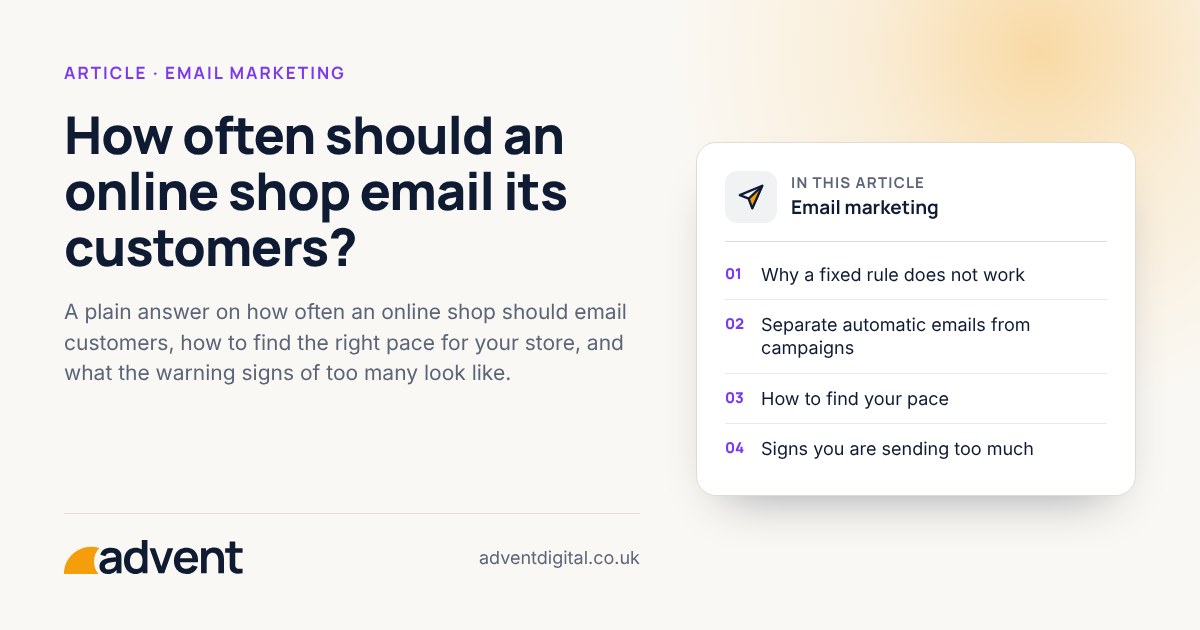
Why a fixed rule does not work
Frequency depends on things that differ from shop to shop:
- How big and how changeable your range is
- How often customers need to buy again
- How much real news you have: new stock, restocks, events
- What customers signed up expecting
Separate automatic emails from campaigns
Automatic emails, such as welcome and after-purchase messages, respond to something a customer did. They do not count towards your campaign rhythm in the same way. Decide frequency for campaigns only, and make sure a person is not receiving both at once. See abandoned basket emails for the automatic side.
How to find your pace
- Say what you promised. Look at your sign-up form. If it said “monthly news”, a weekly email breaks that promise.
- Start with a rhythm you can keep. A reliable fortnightly email beats a burst of daily ones followed by silence.
- Give every email a reason. If you cannot say in one sentence why it exists, do not send it.
- Change one thing at a time. Raise or lower frequency for a few weeks, then compare like with like.
- Consider letting people choose. A preference page, where people pick topics or frequency, can suit stores with varied ranges.
Signs you are sending too much
- Unsubscribes or spam complaints rise after busier weeks.
- Clicks per email fall steadily.
- Customers reply to say they are getting too many.
Signs you are sending too little
- People forget who you are, and the sender name causes confusion.
- Your best customers buy elsewhere between your emails.
- You have real news that never gets sent.
Busy periods
Sales and seasonal events often need more emails for a short time. Tell people in advance, and return to your normal rhythm afterwards. Consider letting people opt for fewer emails during busy periods.
Measure fairly
Use revenue from email, clicks to the right page, unsubscribes and complaints together. Open rates are unreliable because Apple Mail and some other apps load emails in the background for privacy, which records opens that never happened.
From experience
We often see campaigns sent without checking how they look in light and dark mode. An email that looks broken chips away at trust, which matters a great deal before someone buys. It is one example of the detail we check when we work on your campaigns.
Where to get help
Our email campaigns service helps plan a calendar that fits your range and your customers, then reviews what happens.
Related services that often go with it:
- Email automation, for the emails that send themselves.
- Email design, for layouts that match your brand and read well on a phone.
- GA4 setup and audits, so email visits and sales are recorded properly.